

Preschool and daycare in the Netherlands
Looking for a preschool or daycare in the Netherlands? From structured daycare centers to informal playgroups, there are many childcare options available to support your child’s early development.

Preschools and daycare centers in the Netherlands play an important role beyond childcare. They help children build social skills, gain confidence, and gradually prepare for primary education in a new environment.
This guide helps families understand the different options, enrollment processes, and expected costs. As childcare in the Netherlands can be expensive, it is important to explore subsidies and financial support early so you can make informed choices.
Navigate the Dutch preschool and daycare system using the following topics:
- Childcare in the Netherlands
- Types of daycare and preschools in the Netherlands
- What is a daycare (kinderdagverblijf or kinderdagopvang)?
- What do children do at daycare?
- Finding and choosing a daycare
- How to enrol in daycare in the Netherlands
- Costs of daycare in the Netherlands
- What is a preschool (peuterspeelzaal)?
- Preschool voor- en vroegschoolse educatie (VVE) indication
- What do children do at preschool?
- Finding and choosing a preschool in the Netherlands
- How to enrol in preschool in the Netherlands
- Costs of preschool in the Netherlands
- What is a parent-run crèche (ouderparticipatiecrèche)?
- What are playgroups (speelinloop)?
- What do children do at a playgroup?
- Finding a playgroup in the Netherlands
- Enrollment and fees for playgroups in the Netherlands
- International daycare and preschool in the Netherlands
- Enrollment and fees for international daycares
- International schools with early-years provisions
- Other childcare options in the Netherlands
- Transitioning from daycare to ‘big school’
- General tips for daycare in the Netherlands
- Useful resources
Childcare in the Netherlands
In the Netherlands, children are entitled to free primary education from the age of four. Before that age, attendance at daycare or preschool is optional, but many families choose to use childcare services.
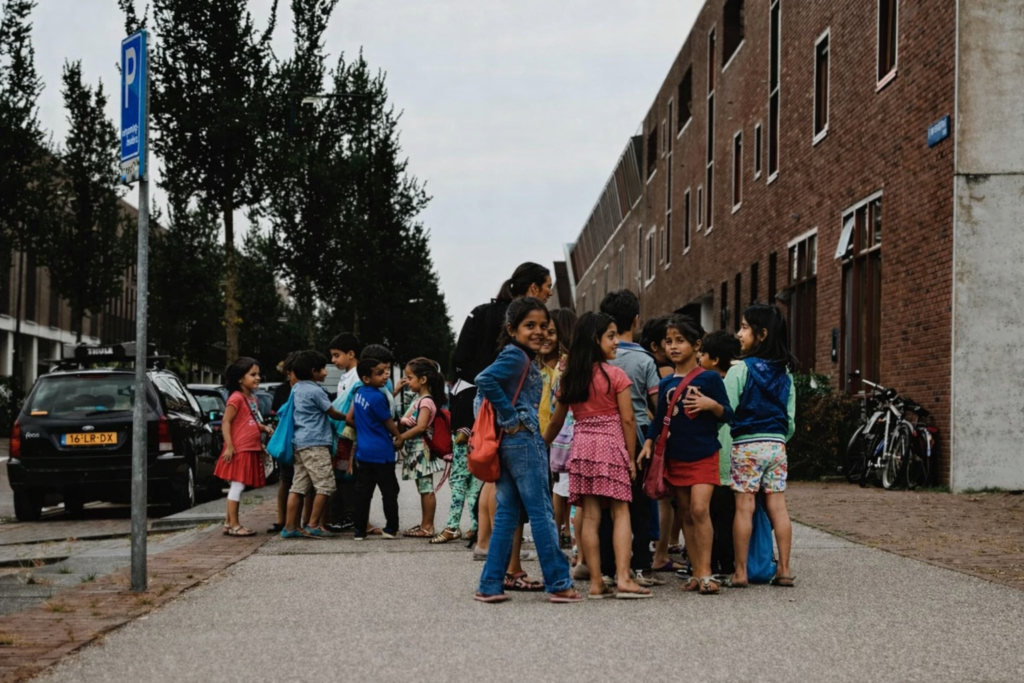
Children can usually attend preschool (peuterspeelzaal) part-time from around age two to two-and-a-half. Daycare centers (kinderdagverblijf or kinderdagopvang) offer longer hours and care for children from birth until they start primary school.
Most childcare providers are privately run and charge hourly fees. To keep childcare accessible, the government offers income-based subsidies. While gross childcare costs may seem high, subsidies often significantly reduce the final amount families pay.
Children with identified developmental delays may qualify for voor- en vroegschoolse educatie (VVE), which provides additional preschool hours focused on early learning and language development.
Types of daycare and preschools in the Netherlands
Families with children under four can choose from several childcare options:

- Daycare (kinderdagverblijf or kinderdagopvang) – full-day care for children aged 0–4, aligned with working hours
- Preschool (peuterspeelzaal) – shorter, half-day programs focused on social development
- Kindergarten (kleuterklas) – play-based programs for children aged 3–4, offered part-time
- Parent-run crèches (ouderparticipatiecrèches) – cooperative childcare run by parents
- Playgroups (speelinloop) – informal group play sessions for young children
- International daycare – bilingual childcare for international families
- International preschools – English-language preschool programs for children aged 2.5–4
- International schools with early-years provisions – nursery programs within international schools
What is a daycare (kinderdagverblijf or kinderdagopvang)?
Daycare centers provide professional childcare for children from birth until age four. Their opening hours usually mirror a standard working day, making them suitable for working parents. Some centers also offer half-day, flexible, or 24-hour care for families with irregular schedules.
Daycares are strictly regulated. They must be approved by the municipality, meet national safety and quality standards, and employ qualified staff. All employees are required to have a valid certificate of good conduct.
Beyond supervision, daycare focuses on early learning and social development. Centers follow an educational policy and support children’s development through structured play and daily routines.
What do children do at daycare?
Daycares typically operate between early morning and early evening. During the day, children eat, nap, play, and participate in age-appropriate activities.
Groups may be divided by age or organized in mixed-age settings. A typical daycare day may look like this:
Typical daycare schedule
- 07:30 – Drop-off and free play
- 09:00 – Songs and fruit
- 09:30 – Activity or outdoor play
- 10:30 – Free play
- 11:00 – Outdoor play
- 11:30 – Lunch
- 12:30 – Nap time or quiet activities
- 14:00 – Wake-up and free play
- 14:30 – Activity or free play
- 15:00 – Snack time
- 15:30 – Free play
- 17:00 – Pick-up
Finding and choosing a daycare
Because many parents return to work soon after birth, waiting lists can be long. It is common for families to register during pregnancy.

Parents can search for approved providers through the National Childcare Register. Visiting daycares in person helps parents assess the atmosphere, staff interaction, and daily routines.
When choosing a daycare, parents often consider:
- Distance from home or work
- Language used
- Fees and subsidies
- Outdoor facilities
- Opening hours and flexibility
- Food arrangements
- Educational approach
- Staff supervision during outings
How to enrol in daycare in the Netherlands
Due to long waiting lists, many parents apply during pregnancy and register with multiple providers.
Enrollment requires the parents’ and child’s BSN numbers, a signed contract, address details, and bank information. Parents also agree on fixed hours and fees.
Costs of daycare in the Netherlands
Families may apply for childcare allowances if both parents work or study. The daycare’s registration number is required for the application.
Hourly daycare costs typically range between €8.50 and €11. The exact cost depends on the provider and services included.
What is a preschool (peuterspeelzaal)?
Preschools are designed for children aged two to four and usually operate for several half-days per week. They focus on social development and school readiness rather than full-day childcare.

Preschools are regularly inspected and must meet national quality standards. Staff are qualified childcare professionals, and group sizes are limited.
Preschool attendance is available to all children, including families where one parent stays at home, and subsidies may apply.
Preschool voor- en vroegschoolse educatie (VVE) indication
Some children qualify for voor- en vroegschoolse educatie (VVE), an early education program aimed at reducing language and developmental delays.
Children receive a VVE indication through assessments at the child health center. With this indication, preschool attendance is largely subsidized, although a small parental contribution may apply.
What do children do at preschool?
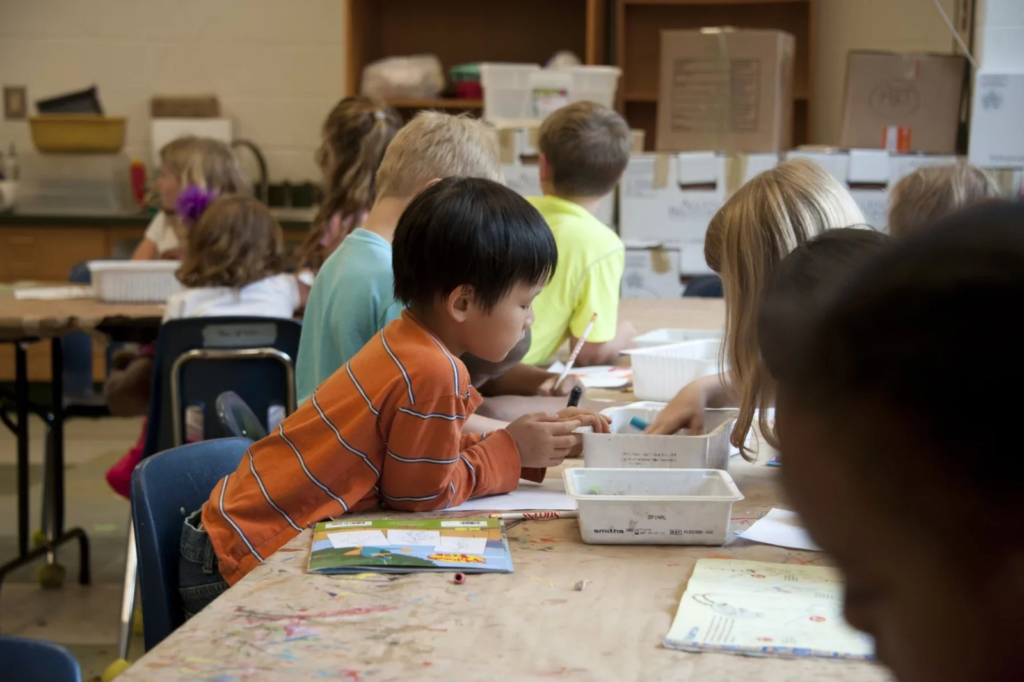
Preschool days are shorter than daycare days and typically run in the morning. Activities include circle time, themed play, outdoor activity, reading, and lunch.

Typical preschool schedule
- 08:20 – Drop-off
- 08:30 – Circle time
- 08:50 – Activity or free play
- 09:15 – Storytime or activity
- 09:30 – Snack and circle time
- 10:00 – Free play
- 10:30 – Outdoor play
- 11:15 – Reading or singing
- 11:45 – Lunch
- 12:30 – Pick-up
Preschool staff monitor children’s development and share progress with parents and primary schools when children move on.
Finding and choosing a preschool in the Netherlands
Parents can visit preschools during open days or by appointment. Municipal websites often provide school-finder tools, and the National Childcare Register lists approved providers and inspection reports.
Most preschools operate in Dutch. Families seeking English-language programs usually choose international preschools or nurseries.
How to enrol in preschool in the Netherlands
Children can be registered from around their first birthday. Preschools usually confirm placement closer to the child’s second birthday.

Waiting times are generally shorter than daycare, but early registration is still recommended. Enrollment requires BSN numbers, a signed contract, and personal details.
Costs of preschool in the Netherlands
Preschool fees are similar to daycare fees. Working parents may apply for childcare allowance. Families not eligible for national benefits may qualify for municipal subsidies arranged through the preschool.
What is a parent-run crèche (ouderparticipatiecrèche)?
Parent-run crèches are cooperative childcare centers where parents take turns caring for children. Fees are lower than traditional daycare, and childcare allowance may still apply.
These centers follow the same regulations as other childcare providers, with limited exceptions.
What are playgroups (speelinloop)?
Playgroups are informal drop-in sessions for children under three. They allow children to play and parents to connect with other families.

Playgroups may be run by municipalities, community groups, or religious organizations and help children prepare for preschool environments.
What do children do at a playgroup?
Sessions usually last around two hours. Activities are informal and child-led, sometimes with themed crafts, music, or storytelling.
Finding a playgroup in the Netherlands
Parents can ask local child health centers or consult municipal websites. International playgroups are also available in larger cities.
Enrollment and fees for playgroups in the Netherlands
Some playgroups require registration and payment, while others are free or donation-based. Waiting lists are common for specialized groups.
International daycare and preschool in the Netherlands
International daycare centers follow the same regulations as Dutch providers but offer bilingual or English-language environments. They are well-suited to international families and often prepare children for both Dutch and international education paths.
Examples include:
- Hestia Early Learning Centre
- Partou
- Skar
- Zein Childcare
Dedicated international preschools are less common, particularly outside major cities.
Enrollment and fees for international daycares
Enrollment is arranged directly with the provider. Childcare allowance may apply, but municipal subsidies are often unavailable if the Dutch preschool curriculum is not followed.
International schools with early-years provisions
Many international schools offer nursery or early-years programs for children aged two or three and above. Fees apply, and childcare allowances cannot be used.
Other childcare options in the Netherlands
Additional options include:
- Childminders (gastouders)
- Nannies
- Au pairs
- Babysitters (oppas)
- Workplace crèches
- Community support initiatives such as Buurtgezinnen
Transitioning from daycare to ‘big school’
Children can start primary school at age four, with compulsory attendance from age five. Daycare and preschool help children develop the social and practical skills needed for school.
Staff usually support families during this transition and share relevant information with primary schools.
General tips for daycare in the Netherlands
It is customary for children to bring small treats to daycare on their birthdays. Many centers encourage healthy options.
Label children’s clothing and keep spare clothes at the childcare center. Small gifts for teachers on special occasions are also common.
Useful resources
- National Childcare Register
- Government.nl
- Belastingdienst.nl
- Municipal preschool guides (The Hague, Amsterdam, Utrecht)