
Childcare in the Netherlands
Raising a child in the Netherlands can feel very different from parenting back home. From early independence to structured childcare systems, it’s never too early to understand your options. This guide explains how childcare works in the Netherlands and what families should expect after arrival.
Finding reliable childcare is a major step for any family. When you are living abroad, navigating a new system, language, and rules can make the process feel overwhelming. The good news is that the Netherlands is one of the most child-friendly countries in Europe, with a wide range of regulated childcare options and strong government support for working parents.
Whether you are looking for daycare, after-school care, a nanny, or occasional babysitting, there are many possibilities available. This guide also explains how Dutch childcare subsidies work and how families can reduce costs.
To help you navigate childcare in the Netherlands, this article covers the following topics:
- Childcare in the Netherlands
- Who can access childcare in the Netherlands?
- Dutch preschool and daycare
- Professional childminders in the Netherlands
- Employer childcare in the Netherlands
- Dutch community childcare schemes
- Before and after school clubs
- Dutch childcare during school holidays
- How to find childcare in the Netherlands
- Childcare costs in the Netherlands
- Child benefits and childcare allowance
- Children’s healthcare in the Netherlands
- Becoming a childcarer in the Netherlands
- Other childcare support available
- Useful resources
Childcare in the Netherlands
The general Dutch term for childcare is kinderopvang. This includes daycare centers, preschools, playgroups, before- and after-school care, nannies, childminders, au pairs, and babysitters.
In the Netherlands, it is common for both parents to return to work relatively soon after a child is born. As a result, demand for childcare is high and waiting lists are common. Families arriving with children should plan early and register for childcare as soon as possible.

Dutch work culture strongly supports work-life balance. Government policy reflects this through parental leave rights and subsidized childcare for working parents. Many employers also offer flexible schedules, allowing parents to divide childcare responsibilities more evenly.
All childcare providers in the Netherlands must be registered and approved by the local municipality. They are inspected regularly, must meet national quality standards, and employ qualified staff. Every childcare worker is required to have a certificate of good conduct.
Parents can search for approved childcare providers using the National Childcare Register (Landelijk Register Kinderopvang). This register lists official providers and their registration numbers, which are required when applying for childcare allowance.
Maternity and paternity leave
Employed mothers in the Netherlands are entitled to 16 weeks of paid maternity leave. Self-employed mothers can also apply for maternity benefits covering the same period.
Partners are entitled to one week of fully paid leave within four weeks of the child’s birth. In addition, they may take up to five weeks of unpaid leave within the first six months. During this unpaid period, it is possible to receive up to 70% of salary through the Dutch Employment Insurance Agency.
Parental leave
The Netherlands also offers parental leave (ouderschapsverlof), which is available to employed parents of children up to the age of eight. Parents can take up to 26 times their weekly working hours as parental leave.
Recent changes allow parents to receive partial salary compensation during the first nine weeks of parental leave, making it easier for families to balance work and childcare in the early years.
Who can access childcare in the Netherlands?
Anyone can arrange informal childcare in the Netherlands if they pay the full cost themselves. However, registered childcare providers will require proof that your family is officially registered in the country.
This is done using your Burgerservicenummer (BSN), the Dutch citizen service number. Every family member receives a BSN after registering with the local municipality, which must be done shortly after arrival.
BSN numbers are essential for many aspects of life in the Netherlands. In childcare, they are used to verify childcare hours when families apply for government childcare allowances.

Families who choose unregistered childcare, such as private babysitting arrangements, are generally not eligible for childcare allowance.
Vaccination of children is recommended but not mandatory in the Netherlands. Childcare centers currently admit unvaccinated children, although discussions on future policy changes are ongoing.
Dutch preschool and daycare
Children in the Netherlands usually start primary school (basisschool) on their fourth birthday. Before this age, children may attend various group-care settings.
Daycare (kinderdagverblijven)
Daycare centers provide care for children from birth until four years old. Due to high demand, waiting lists can be long, sometimes exceeding a year. Many parents register during pregnancy to secure a place.
Typical daycare hours align with the working day, usually from early morning until early evening. Some centers offer part-time or flexible care, including 24-hour daycare options for parents with irregular work schedules.
Preschool (voorschool or peuterspeelzaal)
Preschools are designed for children aged two to four. Children attend several days per week and learn through structured play. For international families, preschools often provide a child’s first exposure to the Dutch language.
Working parents may apply for childcare allowance to help cover preschool costs. Families who are not eligible for childcare allowance may still qualify for municipal subsidies. Children with developmental needs may be entitled to additional support or free preschool placement.
Playgroup (speelinloop)
Playgroups are informal group sessions where parents attend together with their children. These are common across Dutch municipalities and are suitable for babies and toddlers.
Playgroups help children socialize and allow parents to connect with local families. They are also a gentle introduction to Dutch language and culture. Some playgroups are free, while others require registration or a small fee.
In cities with large international communities, parents may also find international playgroups that operate in English or other languages.
Crèche
Some large employers operate onsite childcare facilities for their staff. These function similarly to regular daycare centers and follow the same regulations. Access is usually limited to employees, and places are often offered on fixed days rather than flexible schedules.

Some gyms also provide short-term childcare through onsite crèches, allowing parents to exercise or attend classes while their children are supervised.
International childcare in the Netherlands
In cities such as Amsterdam, The Hague, and Eindhoven, families can find childcare options designed specifically for international and expat children. These include international schools with early-years programs, bilingual daycare centers, and internationally experienced childminders.
International schools with early-years provisions
Some international schools offer early-years education, providing continuity for children who are likely to remain in international education. Availability and age requirements vary, and some schools only accept children aged three and above.
International daycare
International daycare centers are privately run but meet the same regulatory standards as Dutch childcare providers. They are listed in the National Childcare Register and may qualify for childcare allowance.
These centers often support children transitioning into Dutch or international schools and are familiar with the needs of expat families.
International playgroups
International playgroups are common in larger cities and may follow specific educational philosophies or operate informally through community or religious organizations. Parents typically attend with their children, making these groups valuable for both socializing and community building.
Professional childminders in the Netherlands
Childminders
A childminder (gastouder) is a licensed caregiver who looks after children in a home-based setting or small care center. Group sizes are smaller than in daycare, allowing for more individual attention.

Childminders are registered through approved agencies that ensure safety standards are met and act as intermediaries between families and caregivers. Working parents using registered childminders may be eligible for childcare allowance.
Nannies
Nannies provide exclusive care for one family and are employed directly by parents. Families are responsible for salary payments and social security contributions.
Nanny care offers flexibility and personalized routines, and some nannies may live with the family or be shared between households. Costs typically range from €10 to €20 per hour, with possible additional agency fees. Registered nanny care may qualify for childcare allowance.
Au pairs
Au pairs live with host families and provide light childcare support in exchange for accommodation and pocket money. They are usually aged between 18 and 31 and may stay for up to one year under the Dutch Au Pair Exchange Program.

Au pairs work limited hours and are not a replacement for full-time childcare. Host families must meet income requirements and provide a private room. Childcare allowance does not apply to au pair arrangements.
Babysitters
Babysitters (oppas) are commonly used for occasional or short-term childcare. They may be teenagers, students, neighbors, or professional caregivers.
Babysitters can be found through personal networks or agencies. Rates vary but typically average around €10 per hour. Babysitting services are not eligible for childcare allowance.
Employer childcare in the Netherlands
Some employers offer childcare facilities or reserved daycare places for their staff. These services function similarly to standard daycare centers. Parents may apply for childcare allowance unless the employer fully covers childcare costs.
Dutch community childcare schemes
The Netherlands has a small number of parent-run childcare initiatives known as ouderparticipatiecrèches (OPCs). In these arrangements, parents take turns caring for children within the group.
OPCs operate under the Childcare Act and are subject to regulations, although parents do not need formal childcare qualifications. Fees are typically lower than traditional daycare, and registered OPCs may qualify for childcare allowance.
Before and after school clubs
Before- and after-school care is known as buitenschoolse opvang (BSO). It is available for children aged 4 to 13 attending primary school.
BSO may include morning care, lunchtime supervision, and after-school care until early evening. Costs are paid by parents, though childcare allowance may apply.
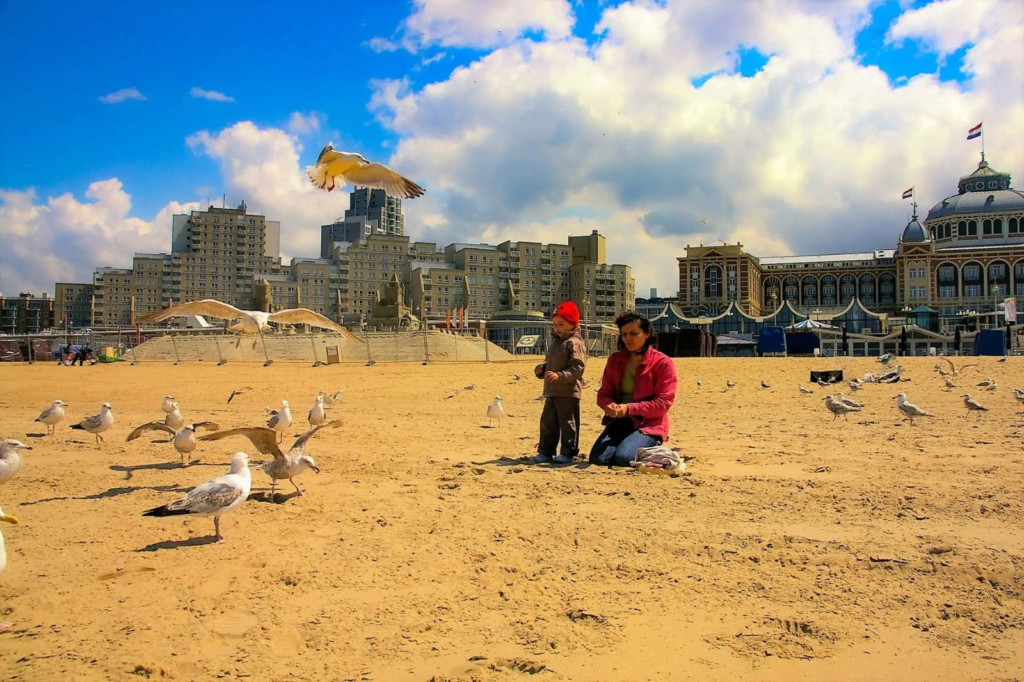
Activities focus on relaxation, play, and creative or sports-based programs. Many BSOs also provide care during school holidays and teacher training days.
Dutch childcare during school holidays
During school holidays, many BSOs continue offering full-day care. Holiday camps are also popular and may focus on sports, arts, or educational activities.
When operated by registered providers, holiday childcare may qualify for partial reimbursement through childcare allowance.
How to find childcare in the Netherlands
Parents can search for childcare options through municipal websites, local family centers, schools, and community groups. Speaking with other parents is often one of the most effective ways to find trusted providers.
The National Childcare Register allows parents to search for approved providers by location and childcare type. Visiting providers in person before making a decision is strongly recommended.
Childcare costs in the Netherlands
Childcare costs typically range between €8 and €10.50 per hour, depending on the type of care and services included. While gross childcare costs in the Netherlands are relatively high, government subsidies significantly reduce the net cost for eligible families.

Childcare subsidies are income-based, meaning final costs vary widely between households.
Child benefits and childcare allowance
The Netherlands provides financial support to families through childcare allowance (kinderopvangtoeslag) and child benefit (kinderbijslag).
Childcare allowance contributes toward the cost of registered childcare and depends on income, working hours, and childcare usage. Applications are submitted online via the Dutch tax authority and require a DigiD.
Child benefit is a separate, non-income-based allowance that helps cover general child-raising costs and is available to most families living or working in the Netherlands.
Children’s healthcare in the Netherlands
Children receive healthcare free of charge once registered under a parent’s Dutch health insurance policy. Registration must be completed within four months of arrival.
Children should also be registered with a local family doctor (huisarts) and the regional child health clinic (consultatiebureau), which provides developmental monitoring and parenting advice.
Becoming a childcarer in the Netherlands
Anyone wishing to work in childcare must meet Dutch legal requirements, including residency rights, background checks, and relevant qualifications. Additional certifications, such as child first-aid training, may be required depending on the role.
Opening a childcare facility is possible but subject to strict regulations and municipal approval.
Fostering and adoption in the Netherlands
Fostering and adoption are regulated under Dutch law and involve detailed screening processes. Adoption of Dutch children requires permanent residency and is a lengthy and costly procedure.
International adoption is also possible but subject to strict international and national regulations.
Other childcare support available
Families who are not eligible for childcare allowance may still receive municipal support for preschool attendance. This subsidy, known as peuteropvang subsidie, is income-dependent and typically arranged directly through the preschool provider.
Useful resources
- Applying for childcare allowance in the Netherlands (government website)
- Babysitting agencies in Amsterdam
- Local preschool guides (municipal websites)
- National Childcare Register (Landelijk Register Kinderopvang)