
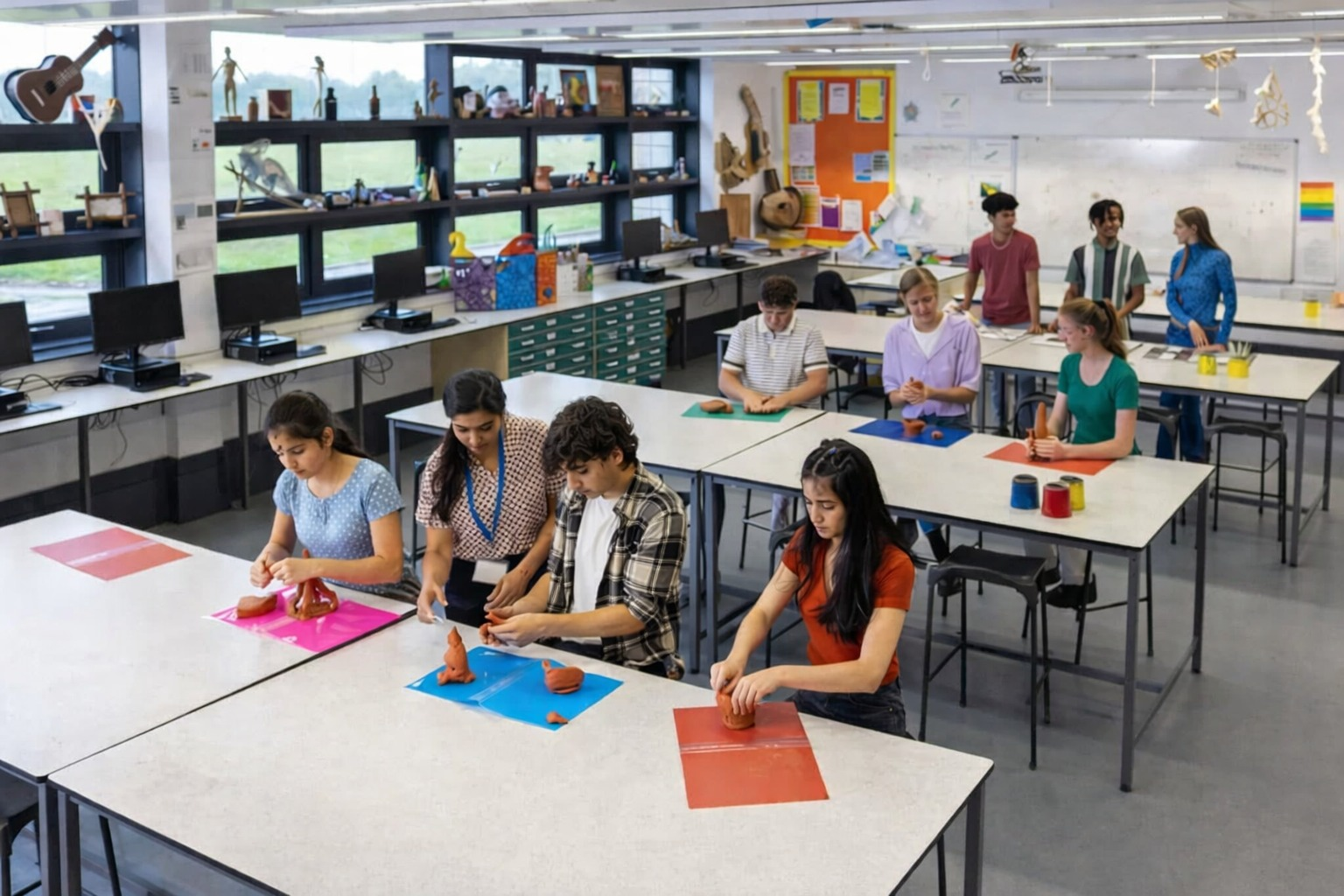
Secondary schools in the Netherlands
Navigating secondary education in the Netherlands can feel overwhelming for relocating families. The system is highly structured, uses multiple academic pathways, and includes a wide range of school types — from government-funded and bilingual schools to international and private institutions.
At Relo Reunite, we simplify this process by breaking down how Dutch secondary education works, what options are available, and how parents can make the right choice for their child.
In the Netherlands, education is compulsory from age 5 until age 18, or until a recognised diploma is obtained. Most children transition from primary school (basisschool) to secondary school (middelbare school) at around age 12, after completing Group 8.
Unlike many countries, the Netherlands does not have a separate middle school system. Students move directly from primary education into secondary education and remain there until graduation.
The secondary education system in the Netherlands
In the Netherlands, education is compulsory for children from the age of 5 until they turn 18, or until they obtain a recognised diploma. Most students move to secondary education at around age 12, after completing Group 8 of primary school (basisschool).

The Dutch education system does not include a separate middle school. Instead, students transition directly from primary school to secondary school (middelbare school), where they remain until graduation. This system combines what many countries refer to as junior and senior high school into one continuous stage of education.
Types of schools in the Netherlands
Educational choice is a core value in Dutch society, resulting in a wide variety of schools. Broadly, secondary schools fall into three categories:
- Government-funded schools (public, special, and bilingual)
- International schools
- Private schools
Government-Funded Secondary Schools
The majority of students in the Netherlands attend government-funded schools. These schools follow national educational standards set by the Ministry of Education, Culture and Science, while retaining flexibility in teaching methods and school culture.
Openbare and bijzondere schools
Openbare schools are non-religious and publicly funded. Many follow educational philosophies such as Montessori, Waldorf, Dalton, or Jenaplan.
Bijzondere schools are also state-funded but are independently governed. They often follow religious, philosophical, or pedagogical principles, including Catholic, Protestant, Islamic, Jewish, Hindu, or humanistic education.

Government-funded bilingual schools
More than 130 Dutch secondary schools offer bilingual education (Tweetalig Onderwijs – TTO). In these schools, part of the curriculum is taught in English alongside Dutch.
Graduates may receive additional certifications such as:
- IB English A2
- Cambridge English certificates
All final examinations are conducted in Dutch, meaning students must have a strong command of the language. Non-Dutch speakers usually attend ISK (Dutch immersion classes) before entering a bilingual school.
Some schools also offer Dutch-German bilingual education in border regions.
Special Needs Secondary Education
Special secondary education (VSO) is designed for students who require additional support, including those with physical disabilities, learning difficulties, long-term illnesses, or behavioral needs.
There are also support programs such as LWOO, which help students follow the vocational pathway successfully.
Academic Streams in Dutch Secondary Education
At the end of primary school, students are placed into one of three academic pathways, based on teacher recommendations and national assessment results:

VMBO – Pre-Vocational Education (4 years)
- Focuses on practical and vocational skills
- Covers sectors such as Technology, Agriculture, Economics, and Care & Welfare
- Leads primarily to vocational education (MBO), with options to progress to higher education
HAVO – Senior General Secondary Education (5 years)
- Prepares students for Universities of Applied Sciences (HBO)
- Suitable for careers such as teaching, engineering, or business
- Allows progression to VWO in some cases
VWO – Pre-University Education (6 years)
- Academically intensive pathway preparing students for research universities
- Includes Atheneum and Gymnasium (which adds Latin and Ancient Greek)

Bridge year or brugklas
Many schools offer a bridge class in the first year, combining multiple academic levels. This gives students extra time to adapt to secondary education and determine the most suitable academic pathway.
Curriculum and School Life
Class Structure
- Average class size: ~25 students
- Mixed-gender classrooms
- Smaller groups for electives
Academic Performance
The Netherlands consistently ranks highly in international education benchmarks, particularly in mathematics, with ongoing efforts to improve literacy outcomes.
School Calendar
- Around 12 weeks of holiday per year
- Six-week summer break
- Short breaks every 6–7 weeks
School Hours
- Typically between 08:00–16:00
- Variable daily schedules
- 20–30 instructional hours per week
- Homework averages 1.5–2 hours daily

Grading System
Grades range from 1 to 10, with:
- 5.5 as the minimum passing mark
- 8 considered a strong result
- 10 awarded only for near-perfect performance
Students can compensate lower grades with higher ones and may repeat a year if necessary — this carries little stigma in Dutch education.
Graduation and Diplomas
Final assessment consists of:
- School exams (50%)
- National exams – Centraal Eindexamen (50%)
Graduation requires an average score of 6.0.
Over 90% of students obtain a diploma annually.
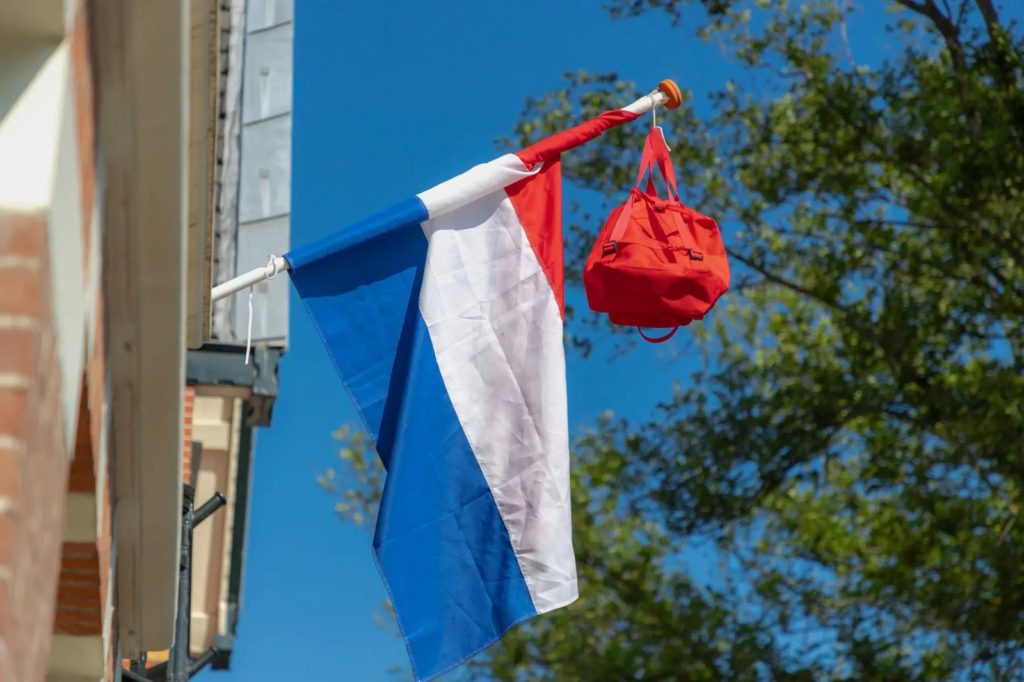
Applying to Government-Funded Schools
Application procedures vary by city and often involve:
- School preference lists
- Municipal lotteries in larger cities
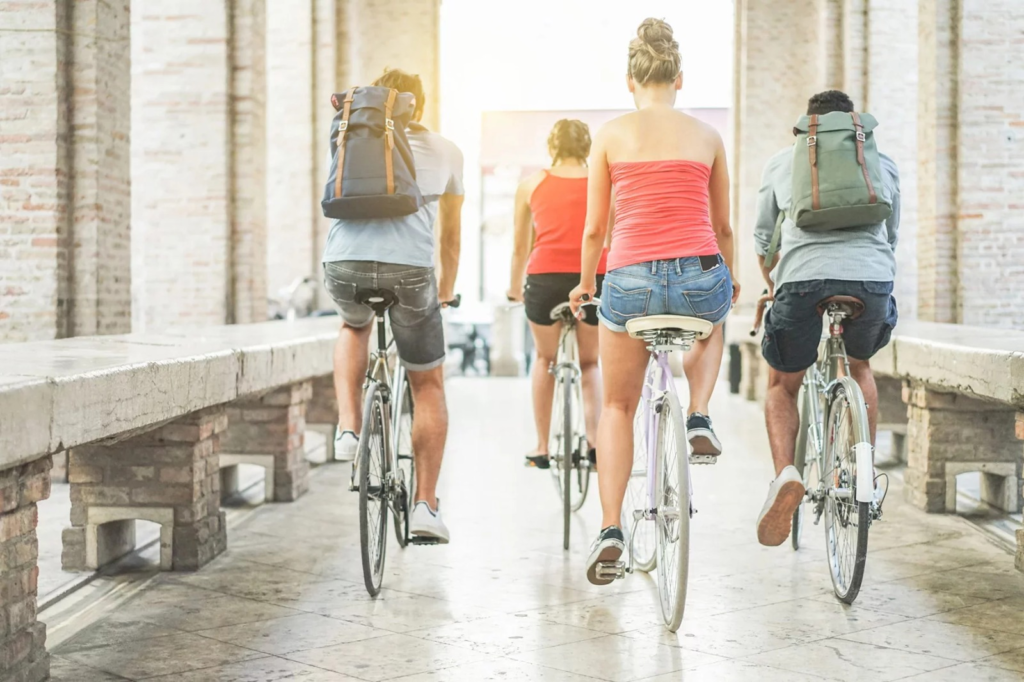
- Cycling distances of up to 30–45 minutes are common
Costs of Government-Funded Schools
Education is free, but schools may request a voluntary parental contribution, typically under €200 per year, covering trips and activities.
Textbooks are free; parents cover supplies, devices, sportswear, and lunch.
International Schools in the Netherlands
International schools primarily serve expatriate families and usually teach in English. Options include:
- Government-subsidized international schools (~€7,000/year)
- Privately funded international schools (higher fees)
Many offer globally recognised curricula such as the International Baccalaureate (IB), including the Career-related Programme (IBCP).

Private Secondary Schools
Private schools are limited in number and charge between €20,000–€35,000 per year. They offer:
- Smaller class sizes
- Individual learning plans
- Short-term enrollment for exam preparation
Boarding Schools
Boarding schools are rare in the Netherlands and mainly serve specific professional communities. There is one international boarding school near Zwolle.